

Apex, N.C., April 8, 2026— LiveSwitch, the world-leading communications platform for small businesses and entrepreneurs, today released findings from its first quarterly Lunchbox Survey, a pulse check on the small business owners who power the American economy by working with their hands. The survey reached over 100 owners and operators of service businesses, spanning the moving and storage industry, skilled trades, home services, landscaping, restoration, and more.
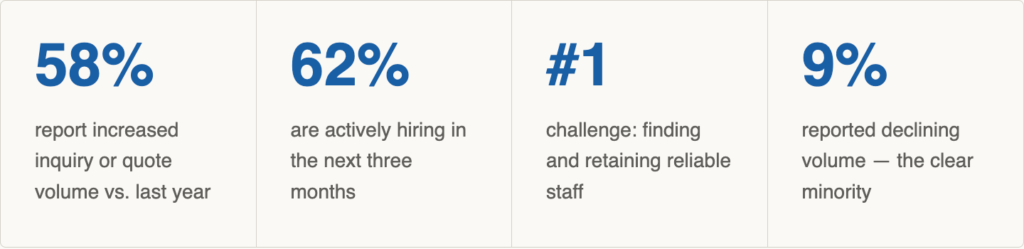
The data tell a story of growth despite mounting pressure. A majority of respondents, 58%, report that their volume of new inquiries or quotes has increased compared to this time last year. Nearly one in six say that volume has significantly increased. Demand isn’t the issue; it’s keeping up with it.
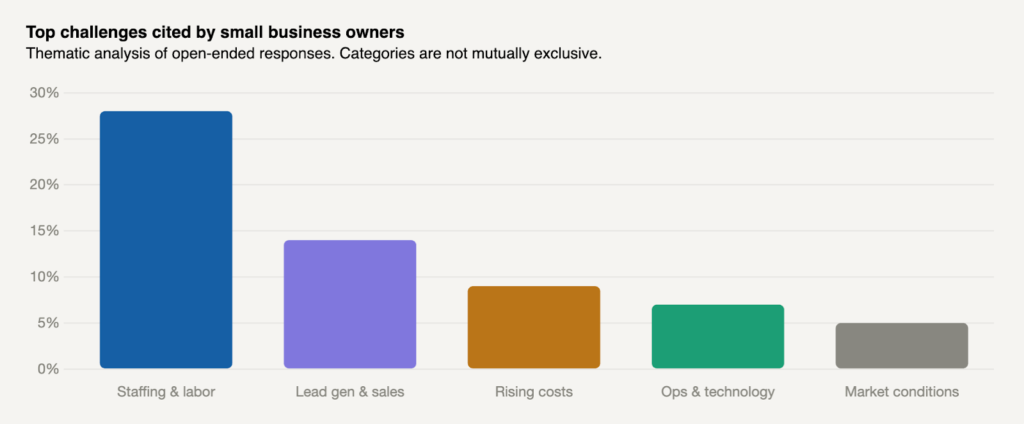
The data also reveal a tension at the core of small businesses in 2026: The ability to capture demand is being constrained by a mix of internal capacity challenges and external pressures. Labor — recruiting, hiring and retaining workers — was cited as the single biggest challenge facing respondents, named in nearly a third of open-ended responses. Rising fuel, wage and resource costs form a secondary pressure, while lead generation and booking efficiency round out the top concerns.
New Inquiries Are up for Nearly Six in Ten Businesses
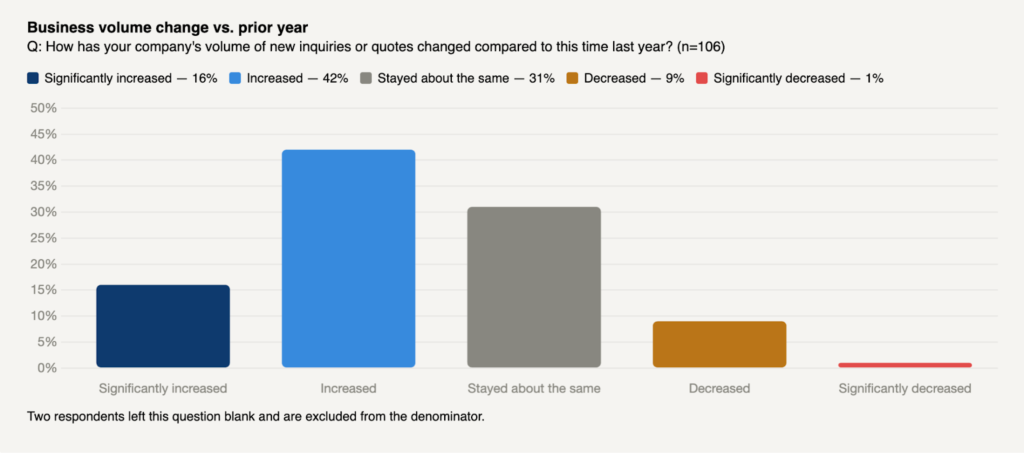
When asked how their volume of new inquiries or quotes has changed compared to the same period a year ago, the dominant theme was growth. Forty-two percent of respondents reported that volume had increased, while an additional 16% said it had significantly increased, bringing the combined growth to 58% of the survey population. Thirty-three percent reported stability, with volume staying roughly the same. Just 9% reported a decrease, and only one responded reported a significant decrease.
More Than Half of Small Business Respondents Are Hiring
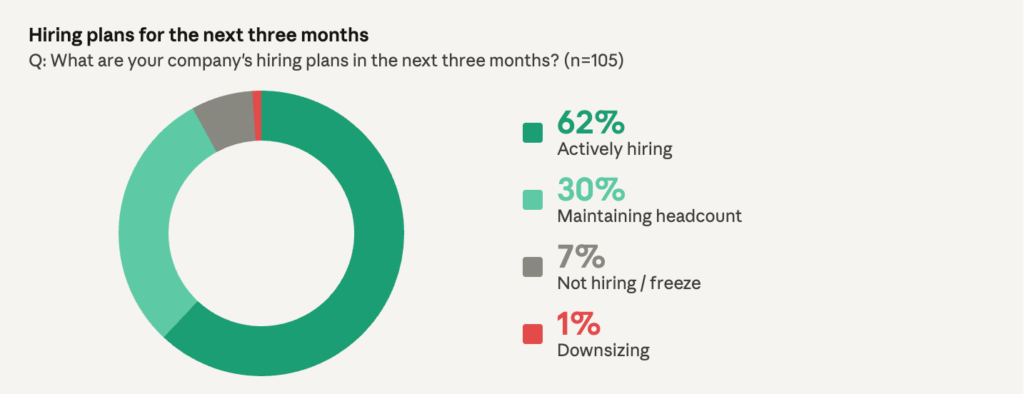
The hiring data reveal that high demand is outpacing the available workforce. Sixty-two percent of respondents say they are actively hiring in the next three months. Another 30% say they are maintaining their current headcount. Only 7% are not hiring, even if someone leaves, and just one business reported plans to downsize.
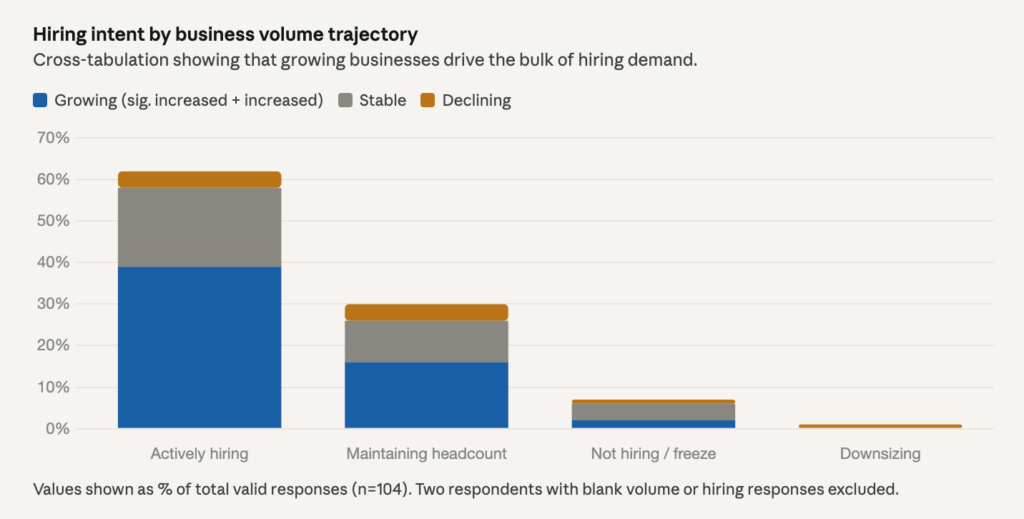
The correlation between growth and hiring is strong. Among businesses reporting increased or significantly increased volume, the overwhelming majority are hiring. Among businesses reporting stable volume, a roughly even split exists between hiring and holding. Among the declining, hiring freezes are more common.
What makes the hiring picture particularly noteworthy is the simultaneous strong intent to hire and widespread complaint about the difficulty of doing so. Many of the survey’s open-ended responses — to a question about the biggest challenge facing the business — have variations of the same theme: trades businesses want workers, are looking for workers, and cannot find workers who meet the reliability bar they require.
In & Out Moving & Delivery, LLC, of Hickory, North Carolina, put it bluntly, noting that their biggest challenge is: “finding people who will show up for work.” Another respondent wrote of needing “skilled contractors – reliable contractors,” drawing a distinction that speaks to quality, not just quantity. Across the board, the staffing problem is not simply headcount; it’s finding people who can do the work well and show up consistently.
Staffing Dominates the Challenge Landscape – but Costs and Lead Generation Are Close Behind
The survey’s open-ended question — “What is the biggest challenge facing your business?” — generated a rich body of responses that, when categorized, reveal a clear hierarchy of pressure points for small business owners in 2026.
Staffing and Labor Quality
Challenges related to staffing and labor quality make up the largest category of responses by a significant margin. Roughly 30% of all open-ended responses touched on some variant of the hiring and staffing challenge—finding workers, retaining them, and ensuring their reliability and quality. This challenge crossed every industry segment in the survey: moving companies, electricians, plumbers, handymen, landscapers, painters, and restoration firms all named it.
Lead Generation and Sales Conversion
The second most common theme centered on getting enough qualified leads and converting them efficiently. One company named “booking percentage” as their primary challenge, pointing to a conversion problem rather than a volume problem. Another pointed directly to “customer acquisition costs,” a signal that paid lead generation economics are under pressure.
Multiple respondents named virtual estimates and faster video-based lead response as tools that have directly addressed their lead-conversion challenges. Twin Cities Premier Plumbing LLC said “offering virtual estimates has been an absolute game changer. I can see 30% to 40% more jobs with the same staff.”
Rising Costs
Roughly 10% of respondents named rising input costs, fuel, wages, materials, or some combination, as their biggest challenge. This concern was particularly pronounced among businesses with significant fuel exposure, such as moving companies. One such company noted that their biggest challenge is “fast rising costs of fuel, combined with the rise of minimum wage.” With rising costs, the margin math is under pressure even when demand is healthy.
Operations and Technology
A smaller cluster of businesses identified operational efficiency and technology as their main challenge. One respondent described their biggest challenge as the “uniting and simplification of our technology, it would be so much easier if we could have everything in one centralized spot.” Another respondent named “operations, sales, and admin efficiency,” the challenge of running all three functions of a growing small business without the administrative infrastructure that larger companies take for granted.
Heading Into Peak Season: Cautious Confidence, Constrained by Labor
The picture we get from the LiveSwitch Lunchbox Survey is one of a small business economy in healthy but strained expansion. Demand is present and, in many cases, growing strongly. Owners are looking to hire. But the inputs required to serve that demand—reliable workers, manageable costs and efficient lead-to-booking processes — remain tight.
The businesses best positioned to convert demand into growth appear to be those that have found ways to do more with less. Twin Cities Premier Plumbing’s account of virtual estimates enabling 30% to 40% increase in jobs handled without adding headcount is the clearest illustration of this principle in the dataset. In a labor-constrained environment, small businesses are using technology to extend the capacity of their existing teams, not replace them.
Service businesses are not slowing hiring as a result of technologies such as artificial intelligence. “Our survey shows that AI can’t fix a pipe,” said Brian Hamilton, co-founder of LiveSwitch. “Small businesses, which drive most economic activity in the country, still need capable workers.”
About LiveSwitch:
LiveSwitch is eliminating the technology gap for small businesses with a cutting-edge AI and communication platform that delivers enormous productivity gains. Leading with agentic AI, we are transforming the way trades do business. Our aim is to increase the 10-year survival rate of U.S. small businesses by 25% over the next five years. When businesses use our platform, they have a better chance to succeed, with customers reporting an average rate of return of 214%.